Knob-and-Tube Replacement Cost
Updated 2026-10-30
None of the cost guides we opened gives a separate price for knob-and-tube, so the figures here are whole-house rewiring prices. This Old House puts rewiring at $6 to $10 per square foot (updated June 2026) — $9,000 to $15,000 for a 1,500 sq ft house. It adds that houses built in the 1920s or 1930s often lack grounding, which significantly increases the complexity and cost of rewiring. Fixr’s rewiring figure is lower, $3 to $6 per square foot, but Fixr says rewiring an older home usually costs more than wiring new construction. A panel upgrade, permits and wall patching can add to the total.
Knob-and-tube replacement cost by house size
There is no knob-and-tube-specific price in these sources: the table shows the cost to rewire a whole house.
| House size | This Old House, rewiring (2026) | Fixr, cost to rewire a house (2025) |
|---|---|---|
| 1,000 sq ft | $6,000–$10,000 | $3,312–$6,026 |
| 2,200 sq ft | $13,200–$22,000 | $7,286–$13,257 |
| 3,000 sq ft | $18,000–$30,000 | $9,936–$18,078 |
Fixr uses one set of figures for wiring or rewiring a house — its FAQ says most homeowners pay $7,286–$13,257 to rewire their entire house — and says rewiring an older home usually costs more. Its figures include materials, labor, outlets and light fixtures. This Old House lists rewiring ($6–$10 per sq ft) separately from new wiring ($3–$5). The two guides use different data, so treat both as a check on a quote, not a price list. For other house sizes, and a range for your own square footage, use the House Rewiring Cost Calculator.
What drives the price up or down
The Center for Energy and Environment, a Minnesota nonprofit, lists the main factors: the size of the house, how much wiring needs replacing, how easy it is to reach, how many outlets and switches you add, and whether the electrical panel also needs an upgrade. This Old House adds that missing grounding in 1920s–1930s houses raises the cost.
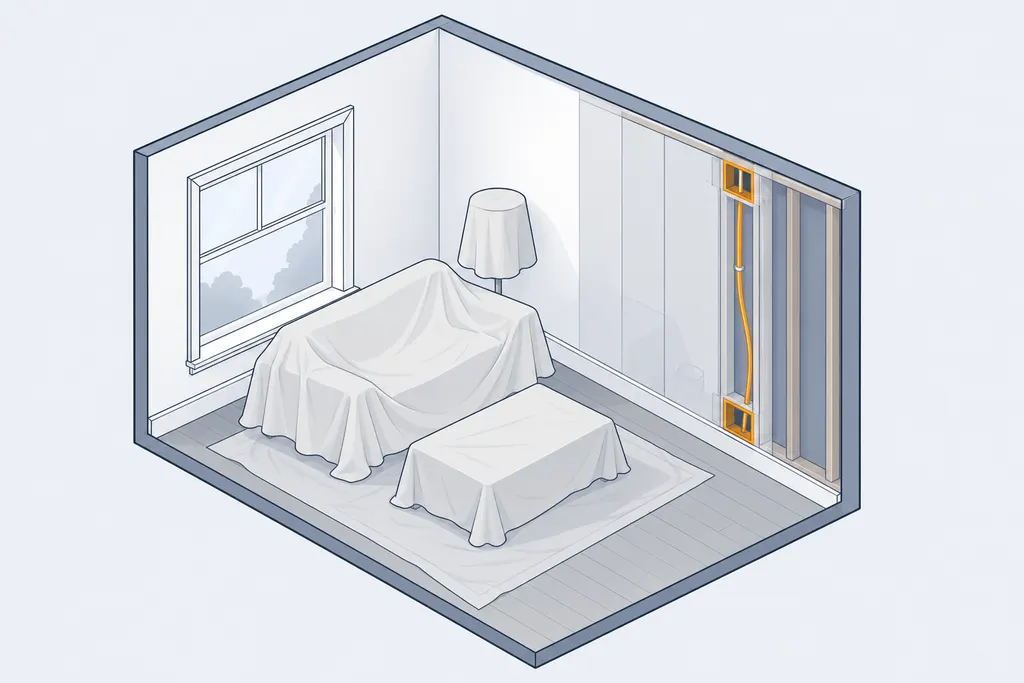
Fixr says most homes can be rewired without removing walls, but the electrician will usually need to make a few cuts in the drywall to reach the wiring. Plaster walls, finished ceilings and tight attics are worth mentioning when you ask for quotes, so the electrician can price access.
Wall repair and other hidden costs
| Item | This Old House (2026) | Fixr (2025) |
|---|---|---|
| Electrical permit (rewiring) | $75 for simple work, up to $900 for major rewiring on older homes | usually in the estimate; can be as much as a few hundred dollars |
| Electrical inspection | — | a few hundred dollars |
| Fuse box to breaker panel | — | $1,500–$4,500 |
| 200 amp panel | $1,300–$3,000 (upgrade) | $1,600–$4,000 (replacement) |
| Electrician labor | $40–$120 per hour | $40–$120 per hour |
Neither guide gives a price for patching walls. Ask whether patching and painting are in the quote or left to you. If the house still has fuses, see Fuse Box to Breaker Panel: Cost and Process; panel prices by size are in Electrical Panel Replacement Cost.
Partial vs. full replacement
Fixr says it’s not always necessary to change all of a home’s wiring at once — you may only need to rewire one room. Check three things before you settle on a partial job:
- What’s still live. The Center for Energy and Environment says the first step is to have an electrician determine whether the knob-and-tube is active.
- Local rules. In Menlo Park, California, for example, the city recommends removing all or part of any knob-and-tube found during construction, as far as practical, and any repair, alteration or extension of an existing system needs a permit and inspection. Ask your local building department what applies to you.
- Your insurer. Ask whether a partial replacement is enough for them, and what proof they want.
How an electrician plans a knob-and-tube rewire
This is the process from the homeowner’s side, not a how-to: the work belongs to a licensed electrician with a permit. Fixr says no one but a licensed electrician should attempt electrical work, and that DIY electrical work is illegal in some areas.
- Evaluation. The electrician finds out which circuits are knob-and-tube and which are still live.
- Written scope. Rooms and circuits, new outlets and switches, the panel, the permit, and who patches the walls.
- Quotes. The Center for Energy and Environment recommends getting at least three estimates for a rewiring project.
- Work and inspection. Fixr says rewiring an average home typically takes about a week, sometimes up to three weeks, and that the work must be inspected.
- Paperwork. Keep the invoice that says what was done, so an insulation contractor or insurance agent can verify the replacement (Center for Energy and Environment).
Insurance requirements and timing the work
Insurer Progressive says getting homeowners insurance that covers knob-and-tube “can be tricky”: some providers may offer a policy, many decline, those that do may charge a higher premium, and they may ask for an inspection report on the wiring’s condition. A This Old House buying guide notes that in some cases buyers can’t even get insurance with knob-and-tube, and master electrician Heath Eastman calls it a red flag to replace and budget for. Ask your insurer before you buy or schedule work: whether they require removal, by when, and what documents they accept.
Plan the rewire before any insulation work. ENERGY STAR advises telling an insulation contractor if your house is from the 1930s or earlier and could have knob-and-tube in the attic, and the Center for Energy and Environment says insulation contractors will not insulate spaces with active knob-and-tube. More on the risks in Knob-and-Tube Wiring: Risks, Insurance, Replacement.
If an outlet or switch feels warm or buzzes, have a licensed electrician look at it soon. If you smell burning, see smoke, or the outlet or switch is hot to the touch, leave the area and call 911.
FAQ
Can I replace knob-and-tube myself? This site doesn’t give instructions for electrical work. It’s a job for a licensed electrician with a permit and an inspection.
How long does a full rewire take? About a week for an average home, according to Fixr, and up to three weeks on some projects.
Will insurance pay to replace it? Ask your insurer — and ask whether the existing wiring affects your policy now.
Illustrations on this page are AI-generated to help you picture the situation. They are not photos of real homes, jobs or people.
Sources
- This Old House — How Much Does an Electrician Cost? (updated Jun 5, 2026)
- Fixr — Average Costs to Wire a House (updated Jan 31, 2025)
- Fixr — Electrical Panel Upgrade Cost (updated Jan 31, 2025)
- This Old House — What Is the Cost to Upgrade an Electrical Panel? (updated Mar 31, 2026)
- Center for Energy and Environment — Dealing with knob-and-tube wiring (Feb 5, 2025)
- Center for Energy and Environment — About Us (page viewed Oct 30, 2026)
- City of Menlo Park, CA — Knob and Tube Safety Wiring Requirements (page viewed Oct 30, 2026)
- Progressive — Does Homeowners Insurance Cover Faulty Wiring? (updated Aug 15, 2023)
- ENERGY STAR — How to Hire an Attic Insulation Contractor (Feb 20, 2024)
- This Old House — Deal Breakers When Buying a Home (updated May 30, 2026)