Aluminum Wiring: Is It Safe?
Updated 2026-10-30
Older aluminum branch wiring is a documented fire concern, and the risk sits at the connections — the places where the wire meets outlets, switches, fixtures and splices. A national survey by the Franklin Research Institute for the U.S. Consumer Product Safety Commission (CPSC) found that homes built before 1972 and wired with aluminum were 55 times more likely than copper-wired homes to have at least one outlet connection reach “fire hazard conditions.” If your home has aluminum wiring that has never been repaired, the CPSC recommends a permanent repair of the connections, done by a qualified electrician.
Why aluminum wiring causes problems at connections
According to the CPSC, several slow processes in aluminum wire connections increase their resistance to electric current. The damage builds up over time, and the extra resistance makes the connection overheat — sometimes to hazardous levels — whenever current flows. The CPSC says the hazard shows up at receptacles, switches and junction boxes, and at connections to major appliances such as dishwashers or furnaces.
In the survey, “fire hazard conditions” meant an outlet’s cover-plate screws reached 300°F (149°C), sparks came from the outlet, or the material around it was charred. The survey looked only at outlet connections; the CPSC notes that other aluminum connections and splices in homes are also prone to fail. The survey collected no data on aluminum-wired homes built after 1972.
Which homes have it
The CPSC says a copper shortage in the mid-1960s led builders to use aluminum for ordinary 15- and 20-amp circuits, not just for large appliances like dryers and ranges. Its guidance:
- homes built before 1965 are unlikely to have aluminum branch-circuit wiring;
- wiring installed between 1965 and the mid-1970s — in new homes, additions, or rewired circuits — may be aluminum.
How to recognize aluminum wiring without opening anything
You don’t need to open any outlet, switch or panel. The CPSC says aluminum wiring was installed as plastic-sheathed cable that looks much like copper cable, so the clue is the printing on the cable jacket:
- Look at exposed cable in an unfinished basement, attic or garage. A flashlight held at a low angle can make embossed lettering easier to read.
- Cable with aluminum conductors is marked “AL” or “ALUMINUM” every few feet.
- If the marking also says “CU-clad” or “Copper-clad,” the cable is copper-coated aluminum, and the CPSC’s repair recommendations don’t cover it.
If you can’t find or read the markings but suspect aluminum, have a qualified electrician make the call. ESFI’s checklist for a home electrical inspection includes identifying whether the wiring is aluminum or copper. Our Panel Risk Check includes aluminum wiring as one of its questions.
Warning signs and what to do
The CPSC is blunt about one point: failing aluminum connections seldom give easy-to-spot warnings, and some have overheated without any earlier sign of trouble.
When there are signs, the CPSC lists:
- outlet or switch cover plates that are hot to the touch;
- flickering lights;
- circuits that stop working;
- a smell of burning plastic at outlets or switches.
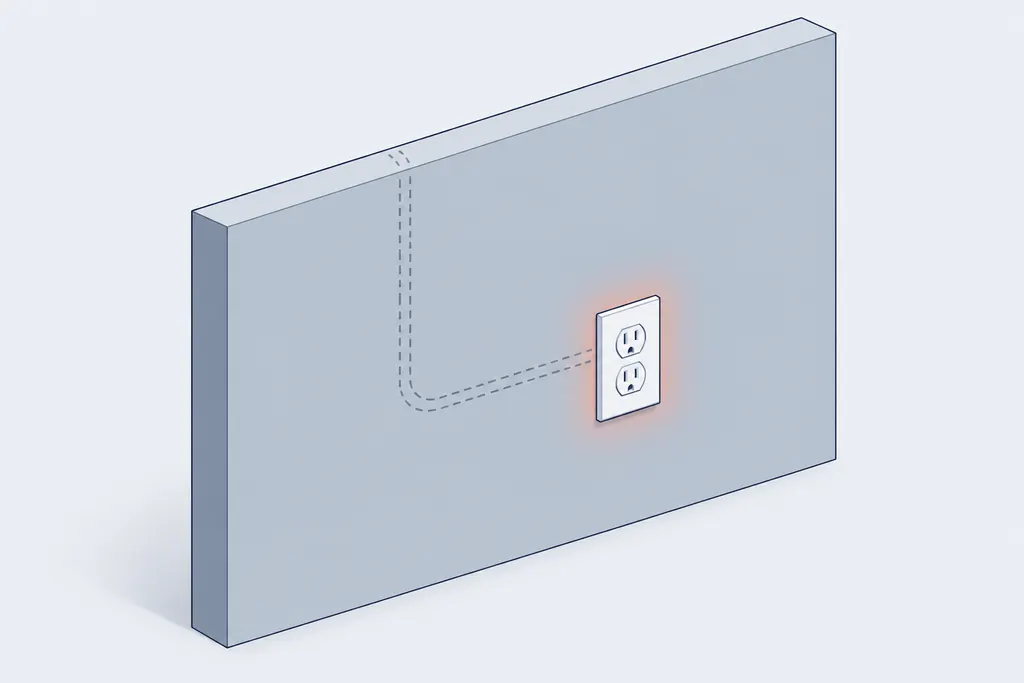
If an outlet or switch feels warm or buzzes, have a licensed electrician look at it soon. If you smell burning, see smoke, or the outlet or switch is hot to the touch, leave the area and call 911.
For the other signs — flickering lights or circuits that stop working — the CPSC says to have a qualified electrician determine the cause and not to try it yourself. Its home safety checklist adds that you should stop using an unusually warm outlet or switch until an electrician checks it.
Repair options the CPSC recognizes
All of these are work for a licensed electrician; this page only explains what each one is, so you can read a quote. As of its 2011 publication, the CPSC approves of only three methods for a permanent repair:
| Repair | What the electrician does (CPSC description) | CPSC notes |
|---|---|---|
| Complete replacement with copper | Replaces the aluminum branch-circuit wiring with copper wire | Eliminates the primary cause of the hazard, the aluminum wire itself; for many homes it is impractical and/or prohibitively expensive |
| COPALUM method | Attaches a short section of copper wire to the ends of the aluminum wire at connection points (“pigtailing”), using a special connector named COPALUM | Should include every aluminum connection in the home; only electricians trained by the manufacturer are authorized to install it |
| AlumiConn connector | Pigtailing with a set-screw type connector instead of the COPALUM crimp connector | May be considered if the COPALUM repair isn’t available; too new to have a long-term safety record like COPALUM |
The CPSC does not consider these permanent repairs:
- Pigtailing with twist-on connectors. In CPSC-sponsored laboratory and life tests, substantial numbers of these connectors overheated severely.
- “CO/ALR” switches and outlets. They perform better with aluminum than other devices but have failed in lab tests, and they aren’t available for every part of the system, such as permanently wired appliances and ceiling light fixtures. The CPSC does not consider them a complete repair.
- Other crimp connectors. No crimp connectors other than COPALUM have been evaluated for joining copper and aluminum wire, and CPSC staff strongly recommends against using them.
The CPSC says AL/CU twist-on connector pigtails or CO/ALR devices may be used only as an emergency, temporary repair of a failed aluminum connection, followed as soon as possible by a complete repair with a CPSC-recommended method. Its recommendations also don’t cover the heavier aluminum wire used for service entrance cables, electric clothes dryers and ranges.
The CPSC says any change to home wiring should be done and inspected under local regulations. This site doesn’t give instructions for this work: it is a job for a licensed electrician.
What it costs
The price depends on the method and the number of connections, so ask for a written quote that names both. Electricians charge $40–$120 per hour, according to Fixr. For whole-house rewiring, see our house rewiring cost calculator, and for hourly rates, how much an electrician costs per hour.
Aluminum wiring, insurance and home sales
Hippo, a home insurer, says some insurers may treat a home with aluminum wiring as higher risk or even deny coverage, and that after an inspection an insurer may ask for repairs to the wiring. Because that applies to “some” insurers, ask your insurer before you buy or renew whether aluminum wiring affects your coverage or premium, and whether a repair by a licensed electrician would change that.
If you’re buying, use the inspection report and a written repair quote when you talk to the seller. If the home was already repaired, ask which method was used and whether the work had a permit.
FAQ
If nothing has gone wrong so far, is it fine? Not necessarily. The CPSC says failing aluminum connections seldom give easy-to-spot warnings, which is why it recommends a permanent repair for wiring that hasn’t been remediated.
Does it matter if my house is newer than the 1970s? The CPSC says wiring installed between 1965 and the mid-1970s — in new homes, additions and rewired circuits — may be aluminum, and its survey has no data on homes built after 1972. If you’re unsure, check the cable markings or ask an electrician.
Illustrations on this page are AI-generated to help you picture the situation. They are not photos of real homes, jobs or people.
Sources
- U.S. CPSC — Repairing Aluminum Wiring, Publication 516 (June 2011)
- U.S. CPSC — Home Electrical Safety Checklist, Publication 513 (July 2008)
- Electrical Safety Foundation International (ESFI) — Indoor Electrical Safety Check (2004)
- Hippo — Does Home Insurance Cover Aluminum Wiring? (undated, read Oct 30, 2026)
- Fixr — Electrical Panel Upgrade Cost (updated Jan 31, 2025)